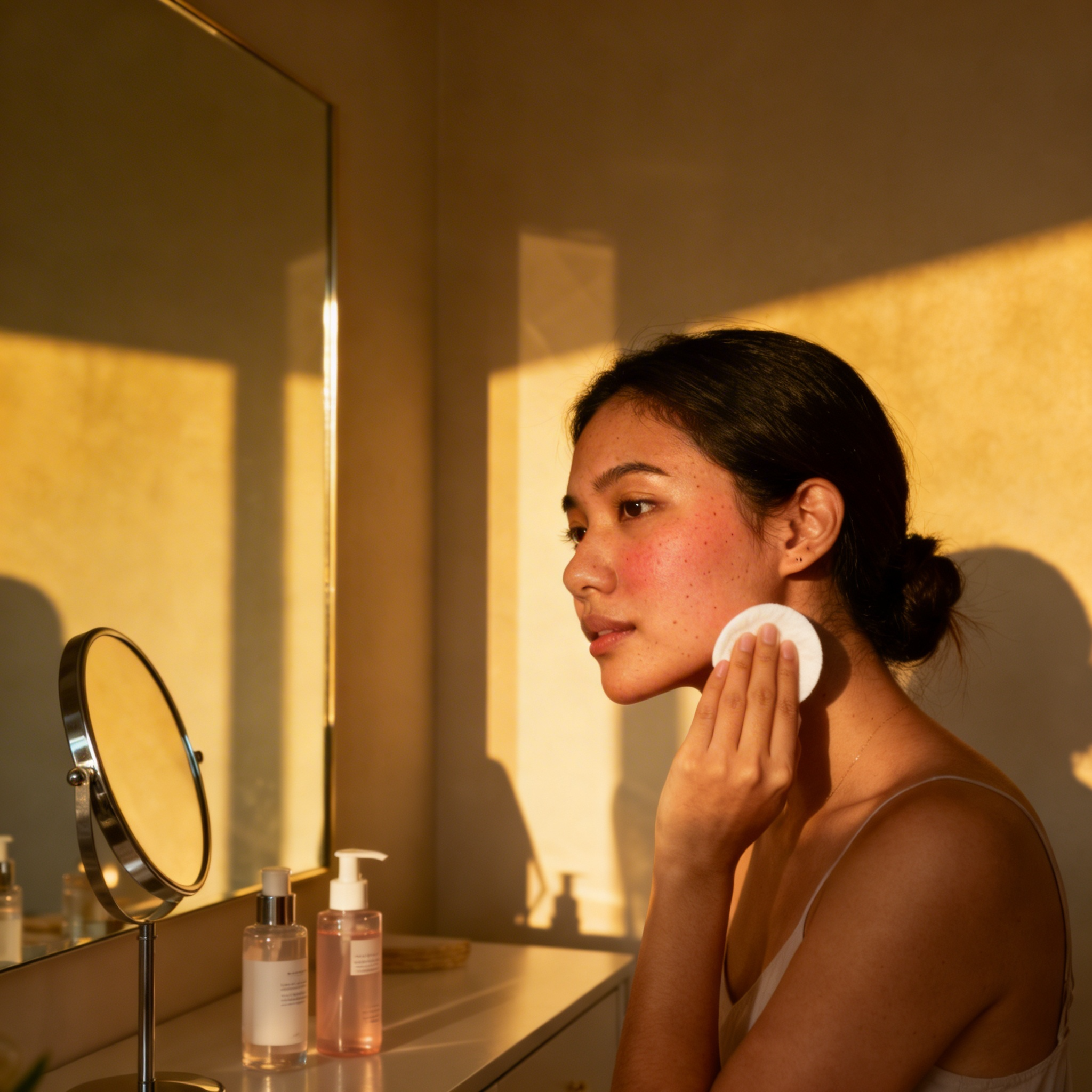

Most people build their skincare routine backwards — they buy products first, then wonder why their skin isn't improving. The real starting point is understanding what your skin actually needs. Here's how to do it properly.
Step 1: Identify Your Skin Type
Before buying a single product, you need to know what type of skin you have. The four main types are oily, dry, combination, and sensitive — and most people are a mix. A simple way to find out: wash your face with a gentle cleanser, don't apply anything, and wait 30 minutes. Then observe:
- Oily all over: you likely have oily skin
- Tight and flaky: dry skin
- Shiny T-zone, normal cheeks: combination skin
- Red, reactive, or stinging after products: sensitive skin
This matters because the wrong products for your skin type can actually make things worse — not better.
Step 2: Start With Three Products, Not Fifteen
The beauty industry profits from complexity. The truth is, a basic effective routine has three steps: cleanse, moisturise, protect. Everything else — serums, toners, essences, eye creams — comes after you've nailed the basics.
The non-negotiable morning routine: Gentle cleanser → Lightweight moisturiser → SPF 30 or higher. That's it. You don't need more to start.
Step 3: Match Products to Your Skin Type
For oily skin
Look for oil-free or gel-based formulas. Niacinamide is your best friend — it regulates sebum without drying you out. Avoid heavy creams and anything with coconut oil high on the ingredient list.
For dry skin
Prioritise hydrating ingredients: hyaluronic acid, ceramides, and glycerin. Use a cream-based cleanser that doesn't strip your skin. Avoid anything with alcohol high in the formula.
For combination skin
This is where most people over-complicate things. Use a balanced cleanser and a lightweight moisturiser that works for both zones. Don't apply different products to different parts of your face — it rarely makes a meaningful difference at this stage.
For sensitive skin
Fragrance-free everything. The shorter the ingredient list, the better. Patch test every new product on your inner arm before applying it to your face. Introduce one new product at a time, at least two weeks apart.
Step 4: Add Actives Only When Ready
Once your skin is stable and calm on your basic routine, you can start adding targeted treatments. Common actives and what they do:
- Vitamin C: brightening, antioxidant protection — use in the morning
- Retinol: anti-ageing, cell turnover — use at night, start slowly
- AHA/BHA: exfoliation, pore-clearing — 1–3 times per week maximum
- Niacinamide: pore-minimising, oil control — works morning or night
Do not use retinol and AHA in the same routine. Do not use vitamin C with niacinamide if you have sensitive skin. Less is genuinely more.
Step 5: Give It Time
Skincare isn't instant. Expect to wait 4–6 weeks before judging whether a product works. Skin cell turnover takes about 28 days. If you're changing products every week because you're not seeing results, you're not giving anything a chance to work.
The rule of thumb: introduce one new product per month. If something causes a reaction, you'll know exactly what it was.
The Shortcut: Let AI Read Your Skin First
If you want to skip the guesswork entirely, Akmata's AI skin analysis does the detective work for you. Upload a photo, and in minutes you'll get a detailed breakdown of your skin's actual condition — plus a personalised routine recommendation across Pharma, K-Beauty, or Natural approaches, depending on your preference.
It's not a replacement for a dermatologist if you have a medical concern, but for the vast majority of skincare decisions, it gives you a much better starting point than trial and error.
Get your personalised skin analysis
Upload a photo. Get a routine built for your actual skin — not a generic one-size-fits-all guide.
Analyse My Skin