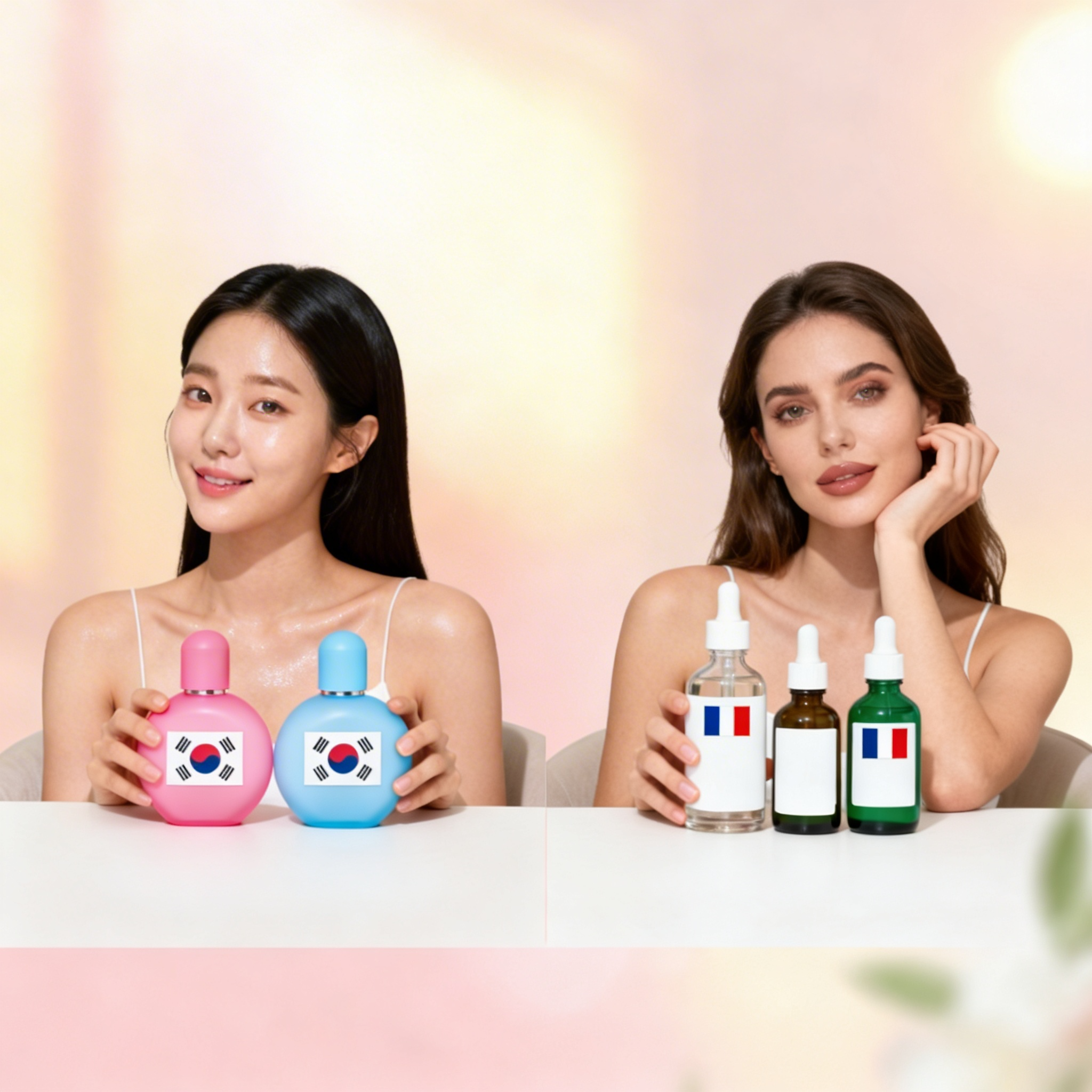
Two countries. Two very different relationships with skincare. Korea treats it as a daily ritual with multiple steps; France treats it as science in a bottle. Both approaches have produced some of the most effective products on the market — but they're built on different philosophies. Here's what you need to know to choose the right one for you.
The Korean Approach: Hydration First, Always
K-Beauty is built on the idea that deeply hydrated skin is the foundation of everything — anti-ageing, brightness, texture, even acne control. The famous 10-step routine isn't about using 10 products for the sake of it; it's about layering light, hydrating formulas that build on each other.
Key characteristics of K-Beauty:
- Multiple lightweight layers rather than one heavy product
- Focus on humectants: hyaluronic acid, snail mucin, centella asiatica
- Gentle, non-stripping cleansers — including double cleansing
- Texture and feel matter as much as results
- Strong culture of SPF use from a young age
K-Beauty is particularly well-suited to normal, dry, and combination skin types. It's also excellent for people who enjoy the ritual of skincare — who see their routine as self-care rather than a chore.
The French Pharmacy Approach: Simplicity Backed by Science
French pharmacy skincare — think La Roche-Posay, Avène, Bioderma, Vichy — is built on a very different premise. Less is more. The focus is on dermatologist-tested, clinically validated formulas with minimal ingredients and maximum efficacy.
Key characteristics of French pharmacy skincare:
- Short, clean ingredient lists with proven actives
- Heavy focus on barrier repair and sensitivity management
- Designed for all skin types, but particularly strong for sensitive and reactive skin
- Often fragrance-free and hypoallergenic
- Dermatologist-recommended and widely available in pharmacies
If your skin is sensitive, reactive, or you've had allergic reactions to products in the past, French pharmacy brands tend to be the safer starting point.
Side-by-Side Comparison
| Criteria | K-Beauty | French Pharmacy |
|---|---|---|
| Philosophy | Prevention through hydration and ritual | Correction through science and minimalism |
| Routine length | 4–10 steps typical | 2–4 steps typical |
| Best for | Normal, dry, combination | Sensitive, reactive, any type |
| Key ingredients | Snail mucin, centella, niacinamide, ceramides | Thermal water, ceramides, niacinamide, retinol |
| Price point | Budget to mid-range | Mid-range (exceptional value for quality) |
| Sensory experience | Highly prioritised — textures, scents, packaging | Functional — efficacy over aesthetics |
| Innovation speed | Very fast — new trends constantly | Slower, more conservative |
Can You Mix Both?
Absolutely — and this is actually what most skincare enthusiasts end up doing. A common hybrid approach: use French pharmacy cleansers and SPF (where they tend to excel), and bring in K-Beauty serums and essences for targeted hydration and treatment.
The best of both worlds: Bioderma Micellar Water (French) → COSRX Snail Essence (Korean) → La Roche-Posay Moisturiser (French) → Anessa SPF (Korean). This kind of cross-philosophy layering is entirely valid — your skin doesn't care about borders.
How to Choose
Ask yourself these three questions:
- Is my skin sensitive or reactive? → Start with French pharmacy
- Do I want a simple or more involved routine? → Simple: French. Layered ritual: K-Beauty
- Is my main concern hydration and glow, or barrier repair and sensitivity? → Hydration/glow: K-Beauty. Repair/sensitivity: French pharmacy
If you're still not sure, the most reliable answer comes from understanding what your skin is actually doing — not what you think it's doing.
Not sure which approach suits your skin?
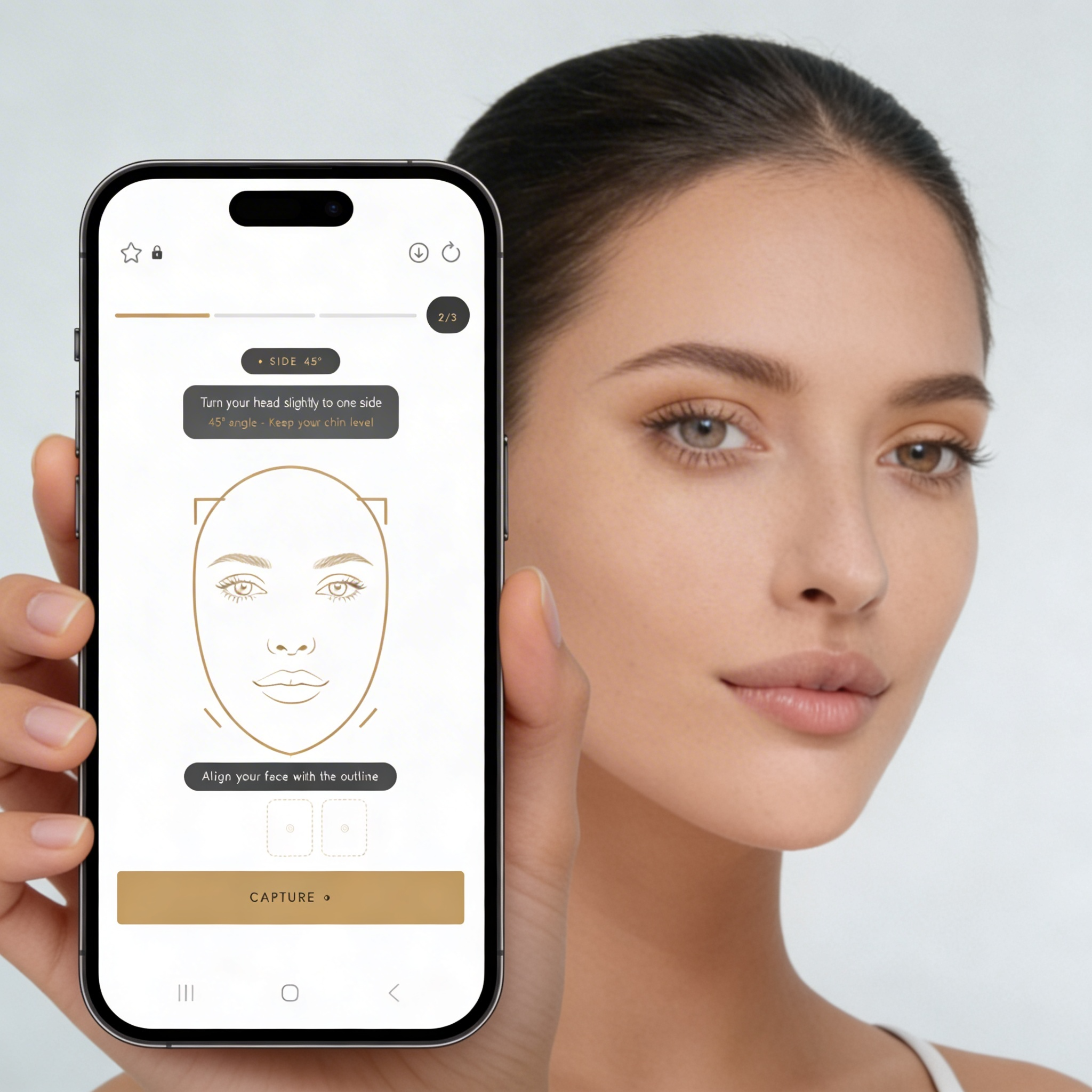
Akmata analyses your skin from a photo and recommends a personalised routine in either K-Beauty, Pharma, or Natural — based on what your skin actually needs.
Get My Skin Analysis