AI-powered skin analysis has gone from science fiction to something you can do in 60 seconds on your phone. But what does it actually detect? And how reliable is it? Here's an honest look at the technology — including what it can't do.
How AI Skin Analysis Works
When you upload a photo for an AI skin analysis, the system analyses the visual characteristics of your skin using computer vision models trained on large datasets of skin images. Think of it like a very experienced eye — one that has seen hundreds of thousands of skin conditions and learned to identify patterns.
The AI doesn't "see" your skin the way a human does. It processes the image pixel by pixel, identifying features like texture variation, tone evenness, pore visibility, and surface characteristics. It then maps these features to known skin conditions and types.
What AI Can Reliably Detect
Good AI skin analysis is genuinely useful for identifying:
- Skin type: oily, dry, combination, normal — visible in the light reflectance patterns of the photo
- Hydration levels: dehydrated skin has a specific visual texture that AI models identify well
- Uneven skin tone / hyperpigmentation: dark spots and uneven colour are straightforward to detect visually
- Visible pores: pore size and appearance are clearly visible in a good quality photo
- Texture irregularities: rough texture, milia, surface congestion
- Redness and reactivity: flushing patterns and redness are detectable from colour analysis
- Visible signs of ageing: fine lines, loss of firmness in surface tissue
What AI does well
- Skin type classification
- Tone and pigmentation analysis
- Texture assessment
- Hydration level estimation
- Pore visibility analysis
- Redness detection
What AI cannot detect
- Hormonal acne causes
- Underlying medical conditions
- Allergies or sensitivities
- Skin cancer or lesions
- What's happening below the surface
- Dietary or lifestyle factors
What AI Cannot Do (And This Matters)
It's important to be clear about the limitations. AI skin analysis is not a medical diagnostic tool. It cannot detect skin cancer, diagnose dermatological conditions like eczema or rosacea with clinical accuracy, or account for factors it cannot see — stress levels, hormones, medication, diet, climate.
If you have a skin concern that looks unusual — an asymmetric mole, a persistent rash, a lesion that isn't healing — please see a dermatologist. AI is not a replacement for medical care.
The honest positioning: AI skin analysis is best understood as a highly informed starting point — better than guessing, better than a generic quiz, but not a replacement for professional medical assessment when that's what's needed.
How Photo Quality Affects Results
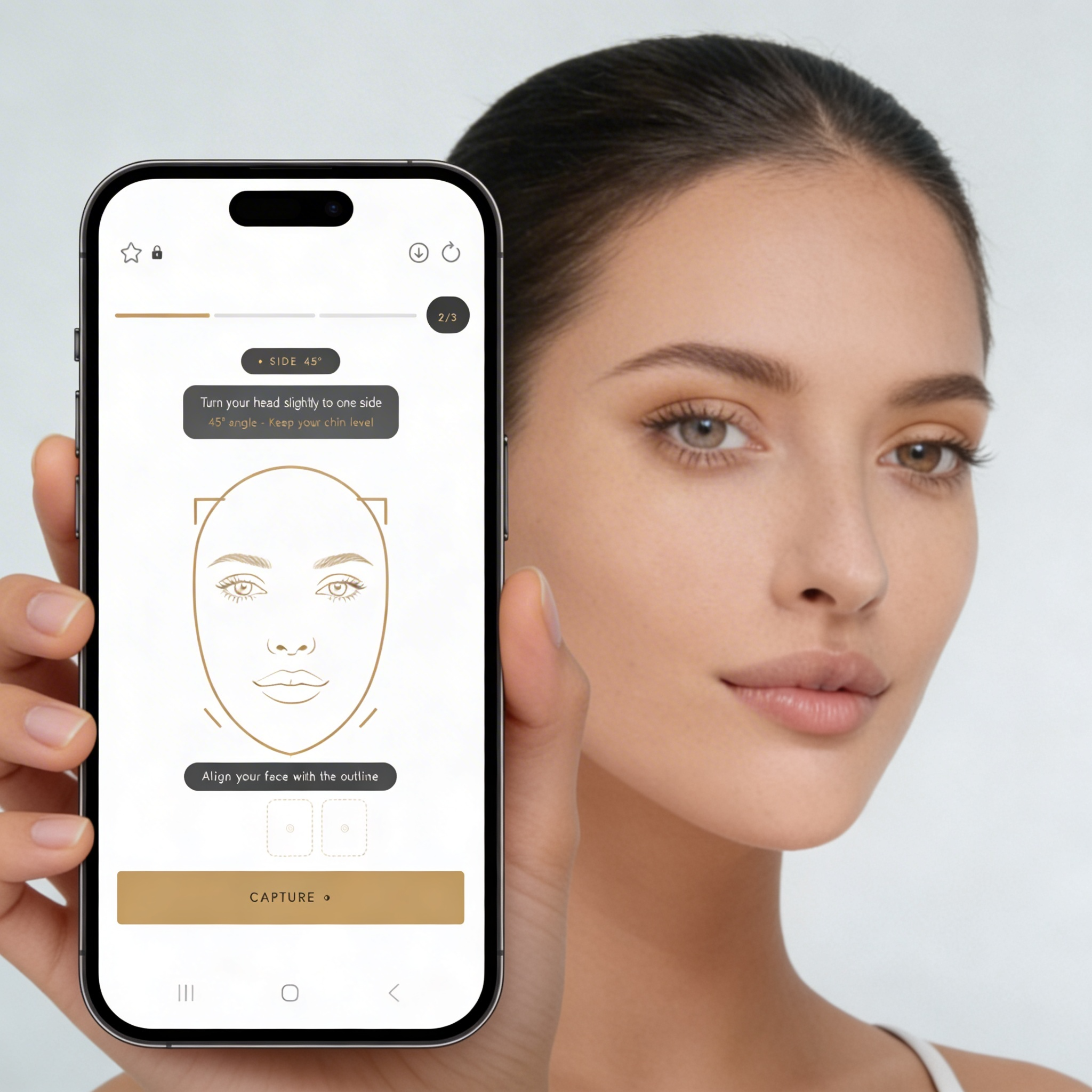
The accuracy of AI analysis is directly tied to photo quality. The ideal conditions for a reliable skin analysis photo:
- Natural daylight, not direct sunlight (which overexposes and washes out detail)
- No makeup or filters
- Face directly facing the camera, not at an angle
- Sharp focus — blurry photos reduce accuracy significantly
- Neutral expression — smiling creates skin folds that distort texture analysis
A poorly lit or heavily filtered selfie will produce less reliable results than a clear, unfiltered photo in good light. This isn't a limitation of AI — it's a limitation of data quality.
What Happens After the Analysis?
A skin analysis is only as valuable as what it recommends next. At Akmata, the analysis feeds directly into a personalised routine recommendation — specifying products by category (cleanser, serum, moisturiser, SPF) matched to your skin's detected condition. You can choose whether your recommendations follow a Pharma, K-Beauty, or Natural philosophy.
The goal isn't to give you a shopping list — it's to give you a clear, logical routine that makes sense for your skin, with products you can actually find.
Try it — it takes under 2 minutes
Upload a photo. Get a detailed skin analysis and personalised routine recommendation. No account required to start.
Analyse My Skin